 正版
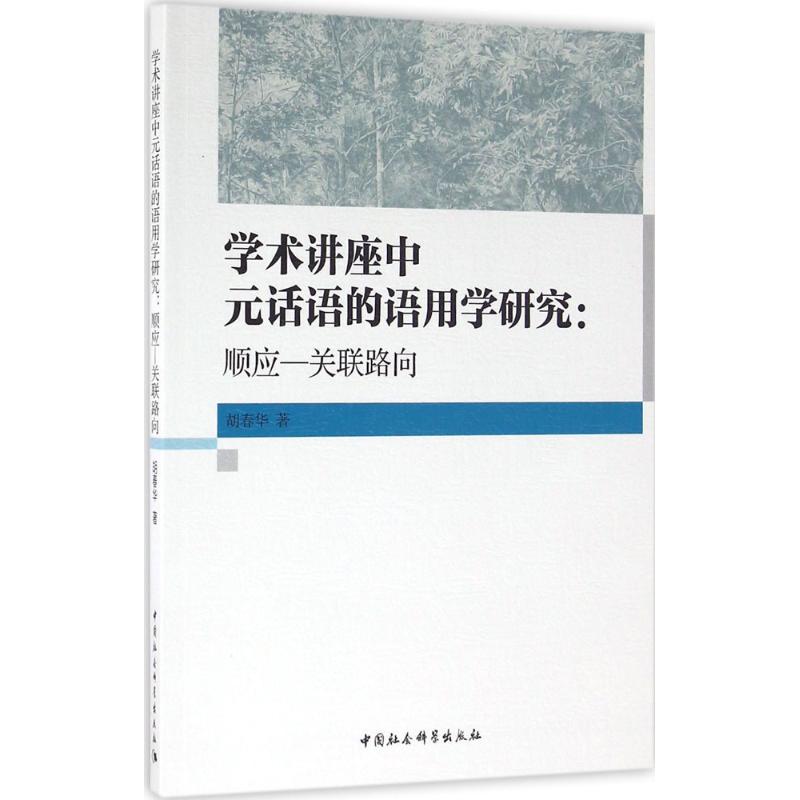
学术讲座中元话语的语用学研究
- 书名
- 学术讲座中元话语的语用学研究
- 作者
- 胡春华 著
- 出版社
- 中国社会科学出版社
- 出版时间
- 2016-06-01
- ISBN
- 9787516183830
- 货号
- 1201394307
- 品相
- 全新
- 分类
- 当代·语言文字
- 书名
- 学术讲座中元话语的语用学研究
- 作者
- 胡春华 著
- 出版社
- 中国社会科学出版社
- 出版时间
- 2016-06-01
- ISBN
- 9787516183830
- 货号
- 1201394307
- 品相
- 全新
- 分类
- 当代·语言文字
作者简介▼
,男,江西南昌人,1978年5月生,2008年毕业于上海外国语大学,获英语语言文学博士学位。同年9月执教于深圳大学外国语学院英语系,担任硕士生导师,主要研究方向为英语语用学,在靠前学术期刊发表学术论文十几篇,研究兴趣比较广泛,对外语教学、认知语言学、翻译等学科有所涉猎。
目录▼
Acknowledgements
Chapter OneIntroduction
1.1Research orientation
1.2Remaining issues of the existing studies
1.3Rationale of the present study
1.4Objective of the present study
1.5Methodology of the current study
1.6Outline of the book
Chapter TwoLiterature Review
2.1Introduction
2.2Terminological diversity
2.3Definitions of metadiscourse
2.3.1Existing definitions of metadiscourse
2.3.2Working definition of metadiscourse
2.4Diversified taxonomies of metadiscourse
2.4.1Meyers classification
2.4.2Lautamattis classification
2.4.3Williams classification
2.4.4Vande Kopples classification
2.4.5Crismore et al.s classification
2.4.6Hylands taxonomy
2.4.7Rahmans classification
2.5Theoretical studies on metadiscourse
2.5.1Communicative perspective
2.5.2Sociolinguistic perspective
2.5.3Psycholinguistic perspective
2.5.4Functional perspective
2.5.5Cognitive perspective
2.5.6Rhetorical perspective
2.6Summary
Chapter ThreeResearch Methodology and Data Collection
3.1Introduction
3.2Research methodology of the present study
3.3Data collection of the current study
3.4Description of the data
3.5Summary
Chapter FourConceptual Framework:An Adaptation-Relevance Model
4.1Introduction
4.2Adaptation Theory
4.2.1Adaptation
4.2.2Context in Adaptation Theory
4.2.3Metapragmatic awareness
4.3Relevance Theory
4.3.1Two pairs of concepts in Relevance Theory
4.3.2Context in Relevance Theory
4.4Relevance-Adaptation Model proposed by Yang Ping
4.5Adaptation-Relevance Model proposed by Ran Yongping
4.6An Enriched Adaptation-Relevance Model of Metadiscourse in Academic Lectures
4.6.1Description of the model
4.6.2Features of the model
4.6.3Significance of the model
4.7Summary
Chapter Fivenetadiscourse in Academic Lectures:An Adaptation-Relevance Account
5.1Introduction
5.2Occurence of metadiscourse in academic lectures
5.2.1Metatext (text-about-text management) in academic lectures
5.2.2Metadiscourse (text-about-discourse management)in academic lectures
5.3Contextual adaptation of metadiscourse in academic lectures
5.3.1Adaptation to linguistic reality
5.3.2Adaptation to psychological motivations
5.3.3Adaptation to social conventions
5.4Relevance-searching of metadiscourse in academic lectures
5.4.1Contextual effect / processing effort distinction and metadiscourse in academic lectures
5.4.2Explicit / implicit distinction and metadiscourse in academic lectures
5.4.3Conceptual / procedural distinction and metadiscourse in academic lectures
5.5Metadiscourse in academic lectures as choice of both making adaptations and searching for relevance
5.5.1Adaptation-relevance as a feature of metadiscourse choice
5.5.2On-line adaptations-making and relevance-searching in metadiscourse choice
5.5.3Adaptations-making and relevance-searching as strategy in metadiscourse choice
5.6Summary
Chapter SixRole of metadiscourse in Academic Lectures Revisited
6.1Introduction
6.2Role of metadiscourse in past studies
6.3Role of metadiscourse in academic lectures:a revisit
6.3.1Significance of a revisit of the role of metadiscourse
6.3.2Role of metadiscourse in academic lectures within the enriched Adaptation-Relevance Model
6.4“Metadiscourse awareness” in academic lectures
6.5Summary
Chapter SevenA Detailed Analysis of the Role of Metadiscourse in Three Full Texts of Academic Lecture
7.1Introduction
7.2Types of metadiscourse in the three academic lectures
7.2.1Metatext (text-about-text management) in the three academic lectures
7.2.2Metadiscourse (text-about-discourse management) in the three academic lectures
7.3Role of the metadiscourse in the three academic lectures
7.4Summary
Chapter EightRole of Metadiscourse and Metadiscourse Awareness:Possible Pedagogical Implications
8.1Introduction
8.2Possible implications for FLT
8.3Possible implications for teacher training
8.4Possible implications for curriculum design
8.5Summary
Chapter NineConclusion
9.1Introduction
9.2Summary of the major findings
9.3Limitations of the present study
9.4Suggestions for further researches
Appendix
Lecture OneCognitive Semantics:The Basic mechanism of Thought (1)
Lecture TwoCognitive Semantics:The Basic mechanism ofThought (2)
Lecture ThreeThe Neural Theory of Language
Bibliography
文摘▼
元话语常常被定义为我们用来告诉读者如何阅读所读内容并对其作出反应和评价的语言。甚至早在哈里斯创造出“元话语”这个术语之前,它已经成为话语分析、语用学以及其他众多研究领域的热点话题。本书在简要回顾相关文献的基础上,以丰富版顺应-关联理论为框架,对学术讲座中元话语的作用进行了重新审视和探讨。研究表明,学术讲座中的元话语可以视作讲座人寻找关联和进行顺应的积极“语篇构建者”,而不是被动的“语篇协助者”。本研究的重要意义在于,它加深了我们对学术讲座中元话语的出现机制和作用的认识。同时,除了理论意义之外,本研究还可以为外语教学实践提供一些有益启示。