 正版
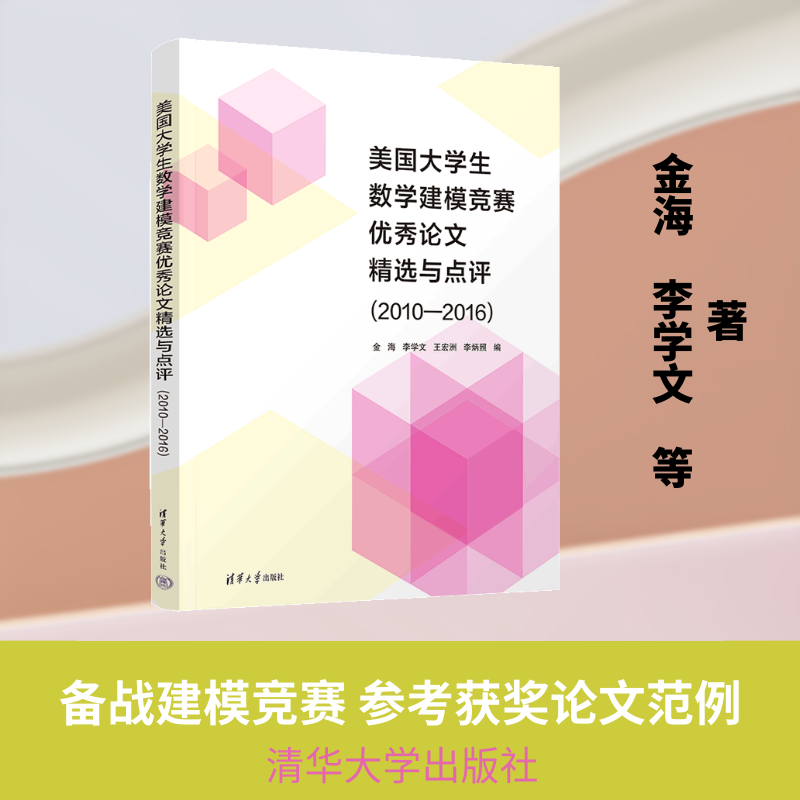
美国大学生数学建模竞赛优秀论文精选与点评(2010—2016)
- 书名
- 美国大学生数学建模竞赛优秀论文精选与点评(2010—2016)
- 作者
- 金海 等 编
- 出版社
- 清华大学出版社
- 出版时间
- 2025-12-01
- ISBN
- 9787302551102
- 货号
- 1204348321
- 品相
- 全新
- 分类
- 当代·外国·世界
- 书名
- 美国大学生数学建模竞赛优秀论文精选与点评(2010—2016)
- 作者
- 金海 等 编
- 出版社
- 清华大学出版社
- 出版时间
- 2025-12-01
- ISBN
- 9787302551102
- 货号
- 1204348321
- 品相
- 全新
- 分类
- 当代·外国·世界
作者简介▼
金海,博士,讲师,美国华盛顿大学博士,2005年到北京理工大学数学系任教,研究方向为计算数学,多年来一直参与学校的数学建模选修课讲授和建模竞赛学生指导工作,取得优异成绩,近年来指导学生获全国大学生数学建模竞赛SPSS创新奖及美国大学生数学建模竞赛Finalist奖。
目录▼
第1章The Sweet Spot (2010A)
1.1问题: The Sweet Spot
1.2问题分析与建模思路概述
1.3获奖论文
1.3.1Introduction
1.3.2The Description of the Problem
1.3.3Models
1.3.4Strength,Weakness and Future Work
1.3.5A Letter Addressed to Baseball Lovers
1.3.6References(略)
1.4论文点评
第2章Criminology (2010B)
2.1问题: Criminology
2.2问题分析与建模思路概述
2.3获奖论文
2.3.1Executive Summary
2.3.2Introduction
2.3.3Analysis of Serial Crime
2.3.4Models Design
2.3.5Application of the Models
2.3.6Discussion and Conclusion
2.3.7References(略)
2.4论文点评
第3章The Great Pacific Ocean Garbage Patch (2010C)
3.1问题: The Great Pacific Ocean Garbage Patch
3.2问题分析与建模思路概述
3.3获奖论文
3.3.1Introduction
3.3.2Analysis
3.3.3Modeling
3.3.4Calculation and Forecast
3.3.5Regulation and Control
3.3.6Advice and Solution
3.3.7References(略)
3.4论文点评
第4章Snowboard Course (2011A)
4.1问题: Snowboard Course
4.2问题分析与建模思路概述
4.3获奖论文
4.3.1Introduction
4.3.2Assumptions
4.3.3Symbols and Terms
4.3.4Analyzing the Models
4.3.5Process of Modeling
4.3.6References(略)
4.4论文点评
第5章Repeater Coordination (2011B)
5.1问题: Repeater Coordination
5.2问题分析与建模思路概述
5.3获奖论文
5.3.1Introduction
5.3.2Assumptions
5.3.3Problem Analysis
5.3.4Details of the Analysis of the Problem
5.3.5Model Based on Cellular System Theorems and Graph Coloring Theorems
5.3.6A Solution Based on Passive Repeater to Problem Ⅲ
5.3.7The Strengths and Weaknesses
5.3.8References(略)
5.4论文点评
第6章Electric Vehicles (2011C)
6.1问题: Electric Vehicles
6.2问题分析与建模思路概述
6.3获奖论文
6.3.1Introduction
6.3.2The Description of the Problems
6.3.3Assumptions
6.3.4Modeling
6.3.5Conclusion
6.3.6References(略)
6.4论文点评
第7章The Leaves of a Tree (2012A)
7.1问题: The Leaves of a Tree
7.2问题分析与建模思路概述
7.3获奖论文
7.3.1Introduction
7.3.2Assumptions
7.3.3Symbols
7.3.4The Development of Models
7.3.5Analyzing the Models
7.3.6Model Process
7.3.7References(略)
7.3.8Letter to a Scientific Journal
7.4论文点评
第8章Camping along the Big Long River (2012B)
8.1问题: Camping along the Big Long River
8.2问题分析与建模思路概述
8.3获奖论文
8.3.1A Memo to the River Managers
8.3.2Introduction
8.3.3The Analysis of the Problem
8.3.4Notations and Assumptions
8.3.5Models
8.3.6Sensitivity Analysis
8.3.7Strengths and Weaknesses
8.3.8Model Improvement
8.3.9References(略)
8.4论文点评
第9章Modeling for Crime Busting (2012C)
9.1问题: Modeling for Crime Busting
9.2问题分析与建模思路概述
9.3获奖论文
9.3.1Introduction
9.3.2Restatement of the Problem
9.3.3Terminology
9.3.4Assumptions
9.3.5Modeling
9.3.6Discussion
9.3.7Strength and Weakness
9.3.8Conclusion
9.3.9Future Work
9.3.10References(略)
9.4论文点评
第10章The Ultimate Brownie Pan (2013A)
10.1问题: The Ultimate Brownie Pan
10.2问题分析与建模思路概述
10.3获奖论文
10.3.1Problem Statement
10.3.2Problem Analysis
10.3.3Assumptions and Notations
10.3.4Modeling and Solutions
10.3.5Conclusions
10.3.6References(略)
10.3.7Advertising Sheet
10.4论文点评
第11章Water,Water,Everywhere (2013B)
11.1问题: Water,Water,Everywhere
11.2问题分析与建模思路概述
11.3获奖论文
11.3.1Introduction
11.3.2The Analysis of the Problem
11.3.3Assumptions
11.3.4Models
11.3.5Strength and Weakness
11.3.6Sensitivity Analysis
11.3.7Conclusions
11.3.8A Position Paper to the Minister of Water Resources
11.3.9References(略)
11.4论文点评
第12章Network Modeling of Earths Health (2013C)
12.1问题: Network Modeling of Earths Health
12.2问题分析与建模思路概述
12.3获奖论文
12.3.1Introduction
12.3.2Model Assumptions
12.3.3Terminology and Basic Analysis
12.3.4The Models
12.3.5Model Analysis
12.3.6Strength and Weakness
12.3.7References(略)
12.4论文点评
第13章The Keep-Right-Except-To-Pass Rule (2014A)
13.1问题: The Keep-Right-Except-To-Pass Rule
13.2问题分析与建模思路概述
13.3获奖论文
13.3.1Introduction
13.3.2Previous Analysis
13.3.3General Assumptions and Definitions
13.3.4Model 1: Right-Hand Rule Relies on Human Judgment for Compliance
13.3.5Model 2: Overtaking Void of Rule
13.3.6Model 3: Anti-Overtaking-Crash System
13.3.7Conclusion
13.3.8References(略)
13.4论文点评
第14章College Coaching Legends (2014B)
14.1问题: College Coaching Legends
14.2问题分析与建模思路概述
14.3获奖论文
14.3.1Introduction
14.3.2Basic Assumption
14.3.3Main Symbol Notation
14.3.4Assessment Standard
14.3.5Model 1: AHP Ranking Model
14.3.6Model 2: The Principal Component Analysis Model (PCA Model)
14.3.7Model 3: Elo Ranking Model
14.3.8Discussion
14.3.9Strengths and Weaknesses
14.3.10Conclusion
14.3.11References(略)
14.3.12Non-Technical Article for Sports Illustrated Magazine(略)
14.4论文点评
第15章Using Networks to Measure Influence and Impact (2014C)
15.1问题: Using Networks to Measure Influence and Impact
15.2问题分析与建模思路概述
15.3获奖论文
15.3.1Background
15.3.2Assumption
15.3.3Academic Influence Evaluation Model on Co-author Network
15.3.4Influence Evaluation Model on Citation Network Based on Random Walk Process
15.3.5The Extended Applications of the Models
15.3.6Conclusion
15.3.7References(略)
15.4论文点评
第16章Eradicating Ebola (2015A)
16.1问题: Eradicating Ebola
16.2问题分析与建模思路概述
16.3获奖论文
16.3.1Introduction
16.3.2Basic SIR Model in Analyzing the Spread of the Disease
16.3.3The Specific Model of SEIR
16.3.4Therapy Model
16.3.5Medicine Delivery System
16.3.6Manufacture Speed
16.3.7One Suggestion for Eradicating Ebola
16.3.8The Other Suggestion for Eradicating Ebola
16.3.9Announcement for Eradicating Ebola
16.3.10References(略)
16.4论文点评
第17章Searching for a Lost Plane (2015B)
17.1问题: Searching for a Lost Plane
17.2问题分析与建模思路概述
17.2.1问题分析
17.2.2建模思路
17.2.3假设、灵敏度分析和数据
17.3获奖论文
17.3.1Introduction
17.3.2Analysis of the Problem
17.3.3Model Construction
17.3.4Results and Discussions
17.3.5Conclusions
17.3.6References(略)
17.3.7Non-Technical Paper for Airlines Press Conferences
17.4论文点评
第18章Managing Human Capital in Organizations (2015C)
18.1问题: Managing Human Capital in Organizations
18.2问题分析与建模思路概述
18.3获奖论文
18.3.1Introduction
18.3.2Modeling
18.3.3Sensitivity
18.3.4Error Analysis
18.3.5Discussion
18.3.6Model Refinement
18.3.7Extended Model
18.3.8References(略)
18.4论文点评
第19章Is It Sustainable? (2015D)
19.1问题: Is It Sustainable?
19.2问题分析与建模思路概述
19.3获奖论文
19.3.1Introduction
19.3.2Establishment of the RPEE Sustainability System
19.3.3TOPSIS Model
19.3.4Policy Simulation Model
19.3.5ARIMA Prediction Model
19.3.6Strengths and Weaknesses
19.3.7References(略)
19.4论文点评
第20章A Hot Bath (2016A)
20.1问题: A Hot Bath
20.2问题分析与建模思路概述
20.2.1问题分析
20.2.2建模思路
20.3获奖论文
20.3.1Introduction
20.3.2The Analysis of the Problem
20.3.3Model Construction
20.3.4Results and Discussions
20.3.5Strengths and Weaknesses
20.3.6References(略)
20.3.7Appendices
20.4论文点评
第21章Space Junk (2016B)
21.1问题: Space Junk
21.2问题分析与建模思路概述
21.2.1问题分析
21.2.2建模思路
21.3获奖论文
21.3.1Introduction
21.3.2Symbols,Definitions and Assumptions
21.3.3Modeling Ideas and Model Overview
21.3.4Attributes Quantification
21.3.5MADM-TOPSIS Method
21.3.6Further Discussion
21.3.7Sensitivity Analysis
21.3.8Strengths and Weaknesses
21.3.9References(略)
21.3.10Executive Summary
21.4论文点评
第22章The Goodgrant Challenge (2016C)
22.1问题: The Goodgrant Challenge
22.2问题分析与建模思路概述
22.3获奖论文
22.3.1Introduction
22.3.2The Analysis of the Problem
22.3.3Model Construction
22.3.4Conclusions
22.3.5Strengths and Weaknesses
22.3.6A Letter to the Chief Financial Officer of the Goodgrant Foundation
22.4论文点评
第23章Measuring the Evolution and Influence in Societys Information Networks (2016D)
23.1问题: Measuring the Evolution and Influence in Societys Information Networks
23.2问题分析与建模思路概述
23.3获奖论文
23.3.1Introduction
23.3.2The Analysis of the Problem
23.3.3Models
23.3.4Strength and Weakness
23.3.5References(略)
23.4论文点评
第24章Are We Heading towards a Thirsty Planet? (2016E)
24.1问题: Are We Heading towards a Thirsty Planet?
24.2问题分析与建模思路概述
24.3获奖论文
24.3.1Introduction
24.3.2Developing a Model
24.3.3Calculations and Verifies
24.3.4Intervention Plan
24.3.5Strengths and Weaknesses
24.3.6Conclusions
24.3.7References(略)
24.4论文点评
第25章Modeling Refugee Immigration Policies (2016F)
25.1问题: Modeling Refugee Immigration Policies
25.2问题分析与建模思路概述
25.3获奖论文
25.3.1Introduction
25.3.2Assumptions
25.3.3Symbols and Definitions
25.3.4Model Formulation
25.3.5Sensitivity Analysis
25.3.6Strengths and Weaknesses
25.3.7Conclusion,A Letter to the UN
25.3.8References(略)
25.4论文点评
附录A美国大学生数学建模竞赛论文写作
论文评审
论文结构
写作规范
修改论文
检索文献
附录B获奖学生感言
建模感悟
美国大学生数学建模竞赛的参赛经验
文摘▼
本书选编了2010—2016年北京理工大学学生参加美国大学生数学建模竞赛的部分获特等奖提名(Finalist)和一等奖(Meritorious Winner)及二等奖(Honorable Mention)的比赛论文。参赛论文均全文刊登,尽可能不作任何删节,所有细节和详细计算过程均予以保留,非常适合广大高校学生学习数学建模及初次参赛者参考。