 正版
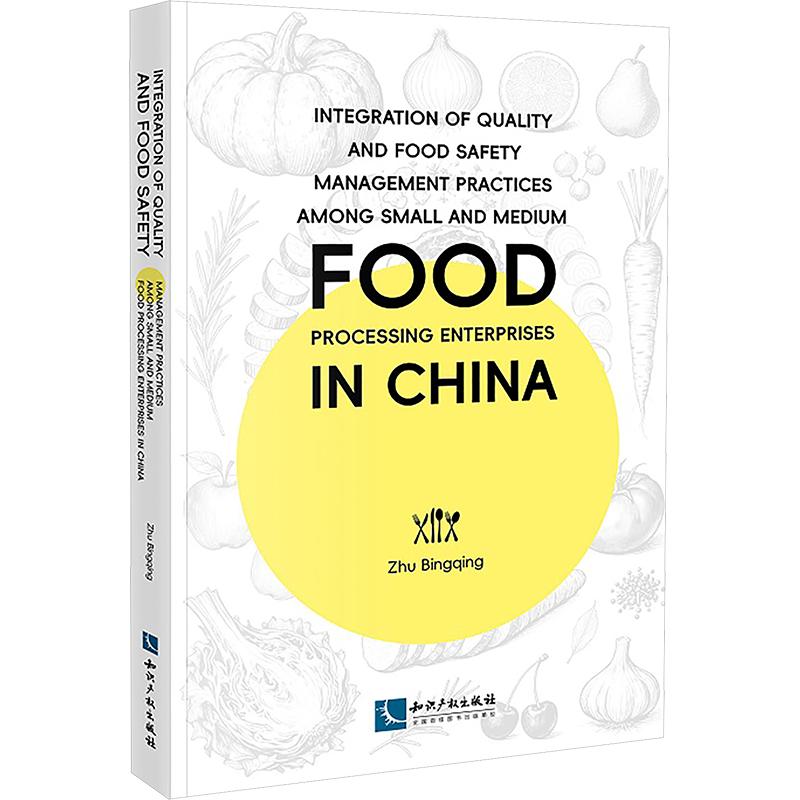
我国中小食品生产企业质量与食品安全管理实践(英文)
- 书名
- 我国中小食品生产企业质量与食品安全管理实践(英文)
- 作者
- 朱冰清 著
- 出版社
- 知识产权出版社
- 出版时间
- 2025-12-01
- ISBN
- 9787524504511
- 货号
- 1204463773
- 品相
- 全新
- 分类
- 当代·经济
- 书名
- 我国中小食品生产企业质量与食品安全管理实践(英文)
- 作者
- 朱冰清 著
- 出版社
- 知识产权出版社
- 出版时间
- 2025-12-01
- ISBN
- 9787524504511
- 货号
- 1204463773
- 品相
- 全新
- 分类
- 当代·经济
作者简介▼
Zhu Bingqing,A Lecturer in Food Quality and Safety at the College of Life Sciences, Hengshui University. She holds a Ph.D. from Universiti Teknologi Malaysia (UTM) and serves as Assistant General Manager of Hebei Pangu Food Co., Ltd. Her academic and professional work has long focused on food quality management and the deep processing technologies of whole grains and minor cereals.
目录▼
Acknowledgements
List of Abbreviations
List of Symbols
List of Tables
List of Figures
List of Appendixes
Chapter 1 Introduction
1.1 Problem Background
1.2 Problem Statement
1.3 Research Questions
1.4 Research Objectives
1.5 Research Scope
1.6 Significance of the Research
1.7 Definition of Terms
1.8 Summary
Chapter 2 Literature Review
2.1 Introduction
2.2 Systematic Literature Review
2.2.1 Questions for Systematic Literature Review
2.2.2 Review Protocol
2.2.3 Inclusion and Exclusion Criteria
2.2.4 Search Strategy
2.2.5 PRISMA and Study Selection Process
2.2.6 Data Synthesis and Extraction
2.2.7 Overview of Publication Sources
2.2.8 Temporal Overview
2.3 Food Industry in China
2.3.1 Food SMEs in China
2.3.2 Quality and Food Safety in China
2.3.3 Policies and Standards of the Food Industry in China
2.4 Research Findings and Gaps from SLR
2.4.1 QM and SM in China
2.4.2 CSFs of IQSM
2.4.3 Operational and Safety Performance
2.4.4 Organisational Culture
2.5 Quality Management
2.5.1 Theory and Philosophies of Quality Management
2.5.2 Quality Management and Industrial Revolutions
2.5.3 Quality Management in Food Sector
2.5.4 Quality Awards
2.5.5 Critical Success Factors for Quality Management
2.6 Safety Management Practices
2.6.1 Food Safety Management
2.6.2 Halal Standards
2.6.3 Critical Success Factors for Food Safety Management
2.7 Integration of Quality and Food Safety Management
2.8 Critical Successful Factors for Quality and Food Safety Management
2.9 Performance (P)
2.9.1 Operational Performance (OP)
2.9.2 Safety Performance (SP)
2.10 Organisational Culture
2.10.1 Quality Culture (QC)
2.10.2 Safety Culture (SC)
2.10.3 Food Quality and Safety Culture
2.11 Underpinning Theories
2.11.1 Resource-Based View
2.11.2 Cultural Theory
2.12 Variables Development
2.12.1 Construct Measurement for IQSM
2.12.2 Construct Measurement of Performance
2.12.3 Construct Measurement of Organisational Culture
2.13 Research Framework
2.13.1 IQSM and Performance
2.13.2 The Role of Organizational Culture
2.14 Conclusion
Chapter 3 Research Methodology
3.1 Introduction
3.2 Research Paradigm
3.3 Research Design
3.4 Preliminary Study
3.5 Research Instrument Development
3.5.1 Questionnaire Design
3.5.2 Expert Validation
3.5.3 Pilot Study
3.6 Reliability and Validity
3.6.1 Reliability
3.6.2 Validity
3.7 Data Collection
3.7.1 Distribution Technique
3.7.2 Response Rate
3.7.3 Population, Sample Size, and Unit of Analysis
3.7.4 Sampling Techniques
3.8 Data Analysis
3.8.1 Data Screening Procedures
3.8.2 PLS-SEM Application in Analysing Data
3.8.3 Model Specification and Assessment
3.9 Summary
Chapter 4 Data Analysis
4.1 Overview
4.2 Data Screening and Preliminary Analysis
4.2.1 Outliers Detection
4.2.2 Normality Assessment
4.2.3 Regression-Standardised Residuals
4.2.4 Bias Analysis
4.3 Descriptive Analysis
4.3.1 Demographic Analysis of the Respondents
4.3.2 Firmographic Analysis of Food Processing SMEs
4.4 The Partial Least Squares (PLS) Analysis
4.4.1 PLS Research Model Analysis
4.4.2 Step 1: Systematic Assessment of Measurement Model (First Order)
4.4.3 Step 1: Assessment of Measurement Model (Second Order)
4.4.4 Step 2: Assessment of Structural Model
4.4.5 Step 3: Systematic Evaluation of the Moderation Role of Organisational Culture
4.5 Summary of Hypothesis Testing
4.6 Summary
Chapter 5 Result Discussion and Conclusion
5.1 Introduction
5.2 Recapitulation of the Study
5.3 Fulfillment of Research Objectives
5.3.1 Research Objective 1: To Identify the CSFs of IQSM in Chinas Food Processing Industry
5.3.2 Research Objective 2: To Analyse the Impact of the CSFs of IQSM on Performance in Chinas Food Processing Industry
5.3.3 Research Objective 3: To Analyse the Moderating Role of OC on the Causal Relationship between IQSM and Performance
in Chinas Food Processing Industry
5.3.4 Research Objective 4: To Propose a Framework for IQSM Implementation in Chinas Food Processing Industry by
Considering the Organisational Culture
5.4 Summary of Research Objectives Fulfillment
5.5 Contributions of the Study
5.5.1 Contributions to Knowledge
5.5.2 Contributions to Practices
5.5.3 Contribution to the Country
5.6 Scope and Challenges of Study
5.7 Limitation of Study
5.8 Recommendations
5.9 Summary
Appendix A Previous Studies on Safety Practices
Appendix B Questionnaire
Appendix C Probability and Nonprobability Sampling
Appendix D Z score
Appendix E Results of Skewness and Kurtosis
Appendix F Cross-Loadings
文摘▼
本书主要探讨了我国中小食品生产企业中,整合质量和食品安全管理(IQSM)的关键成功因素(CSFs)。通过深入的文献回顾和实证研究,识别了领导力、培训和教育、员工参与、以客户为中心、团队合作等在内的关键成功因素。此外,利用SmartPLS 4.0,作者分析了IQSM与企业运营和安全绩效之间的关系,并进一步探索了组织文化(质量文化和安全文化)在IQSM与企业绩效之间的关系。