 正版
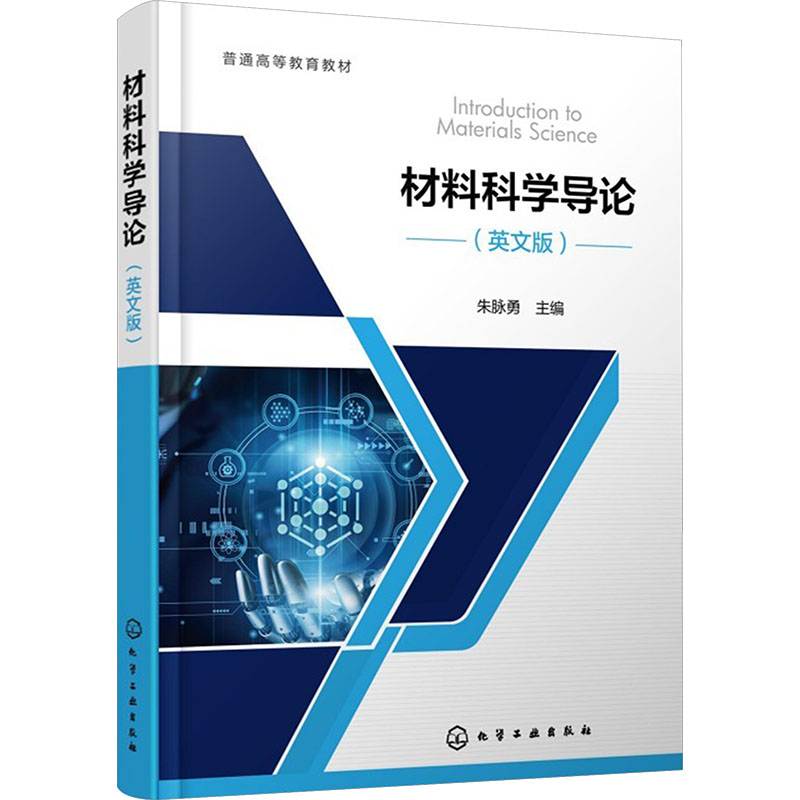
INTRODUCTION TO MATERIALS SCIENCE 材料科学导论(朱脉勇)(英文版)
- 书名
- INTRODUCTION TO MATERIALS SCIENCE 材料科学导论(朱脉勇)(英文版)
- 作者
- 朱脉勇 主编
- 出版社
- 化学工业出版社
- 出版时间
- 2026-08-01
- ISBN
- 9787122490193
- 货号
- 1204484633
- 品相
- 全新
- 分类
- 当代·工业
- 书名
- INTRODUCTION TO MATERIALS SCIENCE 材料科学导论(朱脉勇)(英文版)
- 作者
- 朱脉勇 主编
- 出版社
- 化学工业出版社
- 出版时间
- 2026-08-01
- ISBN
- 9787122490193
- 货号
- 1204484633
- 品相
- 全新
- 分类
- 当代·工业
作者简介▼
朱脉勇,博士,江苏大学,副教授,一直从事《材料科学与工程基础》(英语版)、《复合材料》、《材料分析化学》等课程的教学工作,年均授课超过120学时,教学效果优良。目前作为主讲教师之一,在大学生慕课网上开设全英文《材料导论》公开课一门。科研方面,主要围绕贵金属、无机金属氧(硫)化合物、导电高分子及各类功能复合材料的可控制备展开,系统研究了所制备的材料在绿色催化、环境处理及能源存储方面的应用。近五年来,主持或参与完成国家和省部级科研项目多项,发表科研论文50余篇,其中三篇为英文SCI综述。
目录▼
Chapter 1 Introduction of materials
1.1 Definition of materials
1.2 History of materials development
1.3 Classification of materials
1.4 The contents of materials science
1.5 Methods for material selection
1.6 Development trends of materials science
1.7 Extending materials: about Changxu Shi
1.8 Problems
References
Chapter 2 Atomic structure and bonds
2.1 Historical theories of atoms
2.2 Atomic number, mass number, and atomic masses
2.3 Arrangement of electrons in atom
2.3.1 Quantum numbers
2.3.2 Arrangement of electrons in atoms
2.4 Periodic table of elements
2.5 Periodic law of elements
2.6 Atomic bonds
2.6.1 Primary interatomic bonds
2.6.2 Secondary bonds
2.6.3 Relationship between bonds and materials properties
2.7 Extending materials: about Dmitri Ivanovich Mendeleev
2.8 Problems
References
Chapter 3 Crystal structure
3.1 Amorphous and crystalline materials
3.2 Lattice points, basis and crystal structure
3.2.1 The lattice, basis and crystal structure
3.2.2 Unit cell and primitive cell
3.2.3 Properties of primitive cells
3.3 Crystal system and common crystal structures
3.4 Crystallographic index
3.5 Crystal defect
3.5.1 Point defects
3.5.2 Line defects
3.5.3 Planar defects
3.5.4 Volume defects
3.6 Extending materials: about Auguste Bravais
3.7 Problems
References
Chapter 4 Diffusion
4.1 Introduction
4.2 Diffusion mechanism
4.2.1 The driving force for diffusion
4.2.2 Atomic diffusion in solids
4.3 Diffusion models and equations
4.4 Factors affecting diffusion
4.5 Reaction diffusion
4.6 Extending materials: about Adolf Fick
4.7 Problems
References
Chapter 5 Phase Equilibrium
5.1 Introduction
5.2 General conditions for balance of polyphase system
5.3 Phase law
5.4 Phase equilibrium for one-component systems
5.5 Phase diagram of two-component system and its application
5.5.1 Ideal two-component liquid mixtures—fully miscible two-liquid systems
5.5.2 Lever rule
5.5.3 The basic principles of distillation (or rectification)
5.5.4 Non-ideal two-component liquid mixture
5.5.5 Partially miscible bi-liquid system
5.5.6 Immiscible bi-liquid system—Steam distillation
5.5.7 Simple low eutectic binary phase diagram
5.5.8 System for forming compounds
5.5.9 Gas-solid equilibrium diagram-dissociation equilibrium diagram of hydrate (solid)
5.5.10 A phase diagram in which both liquid and solid phases are completely miscible
5.5.11 Two-component phase diagram of solid partial miscibility
5.5.12 Regional melting
5.6 Extending materials: about Marie Sklodowska Curie
5.7 Problems
References
Chapter 6 Metallic materials
6.1 Introduction
6.2 Production of metal materials
6.3 Iron and steel
6.3.1 Iron ores
6.3.2 HIsarna process
6.3.3 Reducing with hydrogen
6.3.4 Reducing with ammonia
6.3.5 Production of pig iron by reduction with gas
6.3.6 Reduction of iron ore with coal
6.3.7 Combustion synthesis
6.3.8 Smelting reduction of high iron red mud
6.4 Application of metallic materials
6.5 Extending materials: about Marie Sklodowska Curie
6.6 Problems
References
Chapter 7 Ceramic materials
7.1 Introduction
7.2 Structure of ceramic materials
7.2.1 Ionic bonding in simple ceramic compounds
7.2.2 Covalent bonding in simple ceramic compounds
7.2.3 Metallic bonding in simple ceramic compounds
7.3 Synthesis of ceramics
7.3.1 Solid state reaction
7.3.2 Chemical vapor deposition
7.3.3 Molten salt assisted synthesis
7.3.4 Solution based reaction
……
文摘▼
高等教育国际化是一种必然趋势,是实现跨文化交流、构建人类命运共同体的必然要求。本书主要讲授材料科学的基础理论,主要围绕材料的结构、性质和应用展开。主要内容分为三大模块,第一模块即1~5章,主要介绍不同材料所具有的共性规律,主要包括原子结构及结合键、晶体学基础、扩散、相图理论。第二模块即6~9章,主要分类介绍各种传统材料(金属、陶瓷、高分子及复合材料)的结构、性质、成分、加工工艺及应用前景。第三模块即10~12章,简要介绍了先进材料(纳米材料、超分子材料)及材料的回收。
本书可作为材料类专业的本科生(包括来华留学生)教材,也可作为机械类、土木类、化工类等相关专业的参考书。本书也可供从事材料研究、生产和使用的科研人员及工程技术人员参考使用。