 正版
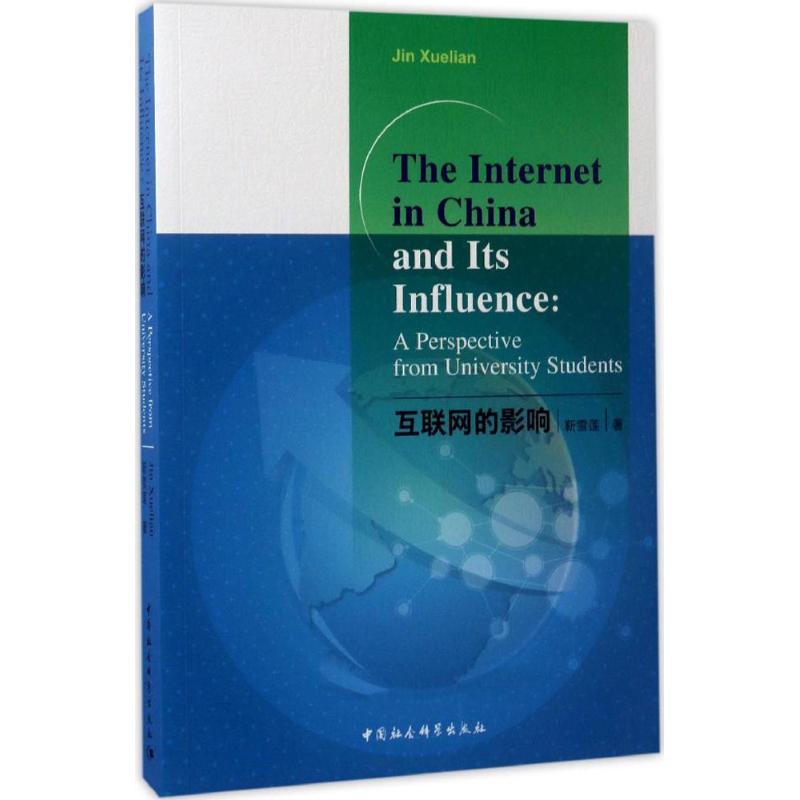
互联网的影响
- 书名
- 互联网的影响
- 作者
- 靳雪莲 著
- 出版社
- 中国社会科学出版社
- 出版时间
- 2017-04-01
- ISBN
- 9787516199619
- 货号
- 1201529982
- 品相
- 全新
- 分类
- 当代·政治
- 书名
- 互联网的影响
- 作者
- 靳雪莲 著
- 出版社
- 中国社会科学出版社
- 出版时间
- 2017-04-01
- ISBN
- 9787516199619
- 货号
- 1201529982
- 品相
- 全新
- 分类
- 当代·政治
作者简介▼
Jin Xuelian received her master's degree in communication from Chongqing University and her PhD in 2015 from the University of Sheffield in the United Kingdom which is a member of the Russell Group of leading UK research universities and a world top-100 university. She is a lecturer in journalism and communication in the College of Media and Arts at Chongqing University of Posts and Telecommunications. She is directing a project funded by the National Planning Office of Philosophy and Social Science, directed five and co-directed three research projects funded by various funding bodies, and published seven journal articles. During her study in the UK, she received the Chinese Student Awards from the Great Britain-China Centre, UK and was elected as the Vice Chair of the PGN network of the Media, Communication and Cultural Studies Association.
目录▼
Abstract
Illustrations
Acknowledgements
Chapter 1: Introduction
1.1 Introduction
1.2 Aim, objectives, and rationale of the research
1.3 Research background
1.4 Limitations of existing literature
1.5 The structure of the thesis
Chapter 2: Literature review
2.1 Introduction
2.2 Democracy and democratisation
2.2.1 Democratisation and favourable conditions
2.2.2 Democracy and its people
2.2.3 Political culture
2.2.4 Free markets, capitalism, and economic growth
2.2.5 Strong civil society and public sphere
2.2.6 Political participation and disengagement
2.2.7 The role of mass media
2.3 Chinas political tradition
2.3.1 Dominant political ideas
2.3.2 Persistence of authoritarian regimes
2.4 Contemporary China in the process of democratisation
2.4.1 Economic reform and opening-up policy
2.4.2 Political reform
2.4.3 Standard of living, urbanisation, education and media exposure
2.5 The development of the Internet in China
Chapter 3: Participants Internet use
3.1 Introduction
3.2 Internet use habit and online activities
3.3 Online news reading, information search, and lecture
3.3.1 Online news reading
3.3.2 Online information search
3.3.3 Online lecture
3.4 Between acquaintances and strangers
3.4.1 QQ
3.4.2 Renren
3.4.3 Weibo (Microblog)
3.4.4 Between acquaintances and strangers
3.5 University intranet and online forums
3.5.1 University Intranet
3.5.2 Online forums
3.6 Online and offline political participation, participation,
and volunteering
3.7 Online travelling and movies
3.7,1 Online travelling
3.7.2 Online movies
3.8 Participant as a communicator
3.9 Civic talk
Chapter 4: Participants perceptions of the Internet
4 1 Introduction
4.2 Belief in the Internets effect
4.2.1 The Internets effect on Chinese society
4.2.2 Individuals effect through the Internet
4.2.3 The Internets effect on individuals
4.3 Understanding of online comments and user-generated content.....
4.4 Disbelief in relevance of social problems
4.5 Attitude toward government corruption
Chapter 5: Discussion
5.1 Introduction
5.2 Political disengagement and why
5.2.1 Introduction
5.2.2 Political disengagement
5.2.3 Political socialisation and irrelevance
5.2.4 Belief in a shock therapy and low political efficacy
5.2.5 Lack of civic organisations aRd activities
5.3 The power of disengagement and mass entertainment
5.3.1 Introduction
5.3.2 Who communicates to the participants online
5.3.3 The power of political disengagement and mass entertainment
5.3.4 Control or liberation: Huxley vs. the gadget theory
5.4 How do participants understand the influence of Intemet use
on them?
5.4.1 Introduction
5.4.2 Why Internet users? .
5.4.3 The Intemet and better-informed citizens
5.4.4 Strangers and internal political efficacy
5.4.5 Belief in We effect and external political efficacy
5.4.6 Summary
5.5 Beyond the lntemet and beyond politics: civic talk and civil society?
5.5.1 Introduction
5.5.2 Civic talk beyond the Internet
5.5.3 The rise of online civil society
Chapter 6: Conclusions
6.1 Introduction
6.2 Reflective summaries
6.3 Scope and limitations of the research
6.4 Contributions of the research
6.5 Further research
Appendices
Appendix I: Interview Guide for In-Depth Interview
Appendix II: Informed Consent Form Template for In-Depth Interviews
Appendix III: An interview invitation letter
Appendix IV: Informed Consent Form Template for Focus Group
Appendix V:The researcher as an instrument
Appendix VI: Yougs Internet Addiction Test
Appendix VII: Other Internet use
Bibliography
文摘▼
本书采用深度访谈、焦点组、网页分析和数字民族志等多种方法,研究大学生的互联网使用;并从大学生的视野探讨互联网对中国民主建设和发展的影响。笔者对大学生丰富多彩的网上生活进行了描述和分析;并且讨论了不同的互联网使用行为和大学生对公共事务、中国民主进程、网络审查制度和互联网的影响的认知对其政治参与的影响。本书在中国的政治文化传统、民主建设进程和互联网在中国的发展的背景下对研究发现进行了解读。